Un comunicadordetach spent nearly three million pesos during one month in Buenos Aires
A detailed breakdown of housing, food, dining and transportation costs in the capital, compared with rental prices, building expenses and utility tariffs
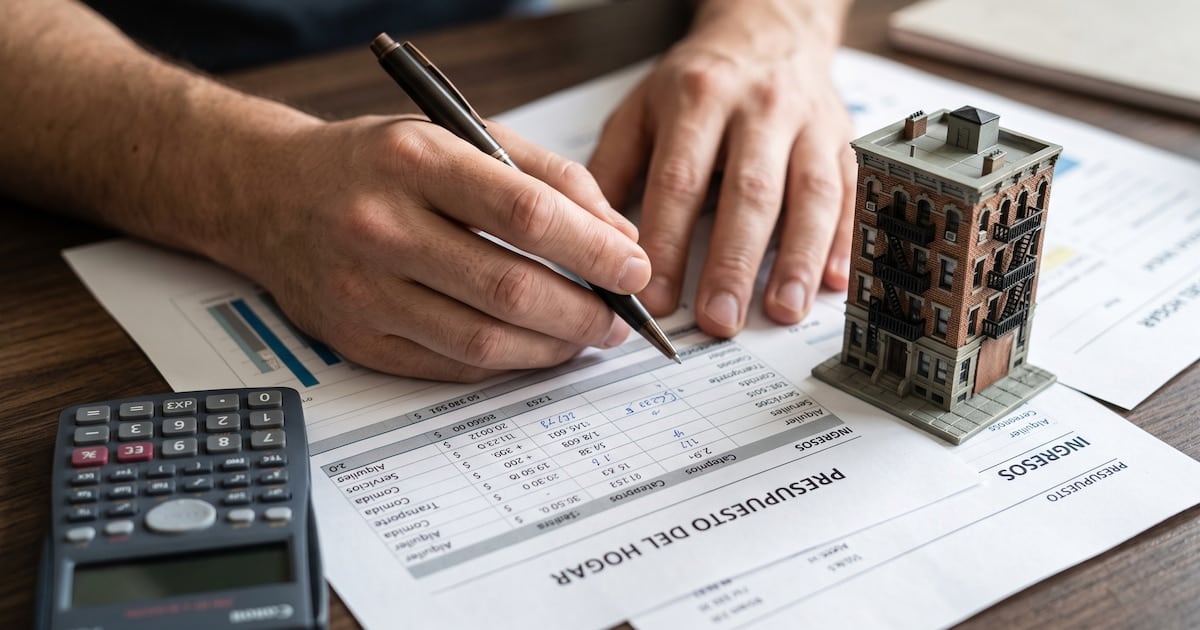
Un comunicador argentino who has lived in Europe since 2019 published a detailed account of his monthly expenses in Buenos Aires, totaling 2,940,000 pesos, or roughly 1,900 dollars at the exchange rate applied to the recorded spending. The breakdown offers a specific snapshot of how a resident allocated nearly three million pesos across housing, food, leisure and transportation during a single month in the Federal Capital.
Housing accounted for half of the monthly expenditure
The largest share of the budget was allocated to accommodation. The rental of a three-room apartment in Palermo, equipped with a balcony, pool, terrace and grill, amounted to 1,500,000 pesos per month. As a point of comparison, the communicator noted that the equivalent of 800 to 900 euros in Spain would be sufficient only for a room rental, suggesting that the housing budget he considered burdensome in pesos appeared considerably more manageable when expressed in European currency.
- Housing: 1,500,000 pesos for a three-room apartment in Palermo.
- Food: 620,000 pesos, split between 400,000 pesos at the supermarket, 100,000 pesos at the butcher and 120,000 pesos at the greengrocer and corner store.
- Restaurants and bars: 480,000 pesos, calculated on the basis of two dinners per week at an average of 60,000 pesos each.
- Delivery services: 120,000 pesos.
- Transportation: 120,000 pesos covering ride-hailing applications and transfers within the metropolitan area.
- Gym membership: 70,000 pesos.
- Haircut: 30,000 pesos.
The communicator also provided the price range for restaurant and bar visits, indicating that individual outings cost between 30,000 and 100,000 pesos depending on the establishment. In his own assessment of the figures, he acknowledged that the total appeared steep for Argentine salaries, but considered the equivalent amount expressed in dollars or euros less extreme. The final monthly sum reached 2,940,000 pesos.
Rental prices rose below the year-on-year inflation rate
The rental market provides a reference framework for these expenditures. According to the latest Zonaprop report, the average monthly asking rent for a one-room apartment of 40 square meters in the city stands at 779,370 pesos, while a two-room unit of 50 square meters reaches 898,154 pesos. A three-room apartment of 70 square meters is listed at around 1,214,267 pesos. Over the first nine months of the year, published rental values increased by 20.8 percent, a figure below the 33.4 percent year-on-year inflation rate recorded over the same period.
Building expenses, however, continued to add pressure to tenant budgets. ConsorcioAbierto recorded an average of 379,774 pesos in September for the Federal Capital, representing a 4.9 percent increase over the previous month and a 28.6 percent rise compared with September of the prior year.
Utility services recorded the steepest increase
Basic services constituted the most rapidly rising component of the household basket. The combined index for electricity, gas, water and transportation for a home in the Metropolitan Area of Buenos Aires reached 266,456 pesos in October, with the basket accumulating a 56 percent increase over twelve months, according to the reported data.
Let's go to the numbers: housing alone consumed half of the recorded monthly expenditure, while food, dining and delivery added 1,220,000 pesos. The comparison with rent and expenses shows that the properties published by Zonaprop and ConsorcioAbierto rose at rates below or around the annual inflation figure, whereas the services basket advanced considerably more. The variable to watch next month is the evolution of the services basket, because it is the component that recorded the most significant twelve-month increase in the available measurements and could therefore weigh increasingly on household budgets.